Cell–Cell Communication Analysis on a Spatial Thymus Sample
In this case study, we perform a complete cell–cell communication (CCC) analysis on a spatial transcriptomics sample of human thymus tissue in iSCanGuide. Starting from an annotated dataset, we run the consensus CCC pipeline, inspect sender–receiver pairs, drill into ranked ligand–receptor interactions, evaluate spatial co-expression with Moran's I, characterise receiver-side inflow, and compare two runs side by side.
You can import the study in this tutorial with view-permission to your study list using the following link:
https://iscanguide.advaitabio.com/studies/import/Pg47QjGF69cYaxHJ8
Dataset
Field | Value |
|---|---|
Study | Thymus_GSM6281320 |
Sample | Thymus E1 |
Sample type | Spatial (10x Visium-style) |
Cells / spots | 1,831 |
Annotation used | CD4_CD28 (2 cell types: CD4-CD28- T cell, unassigned) |
Workflow
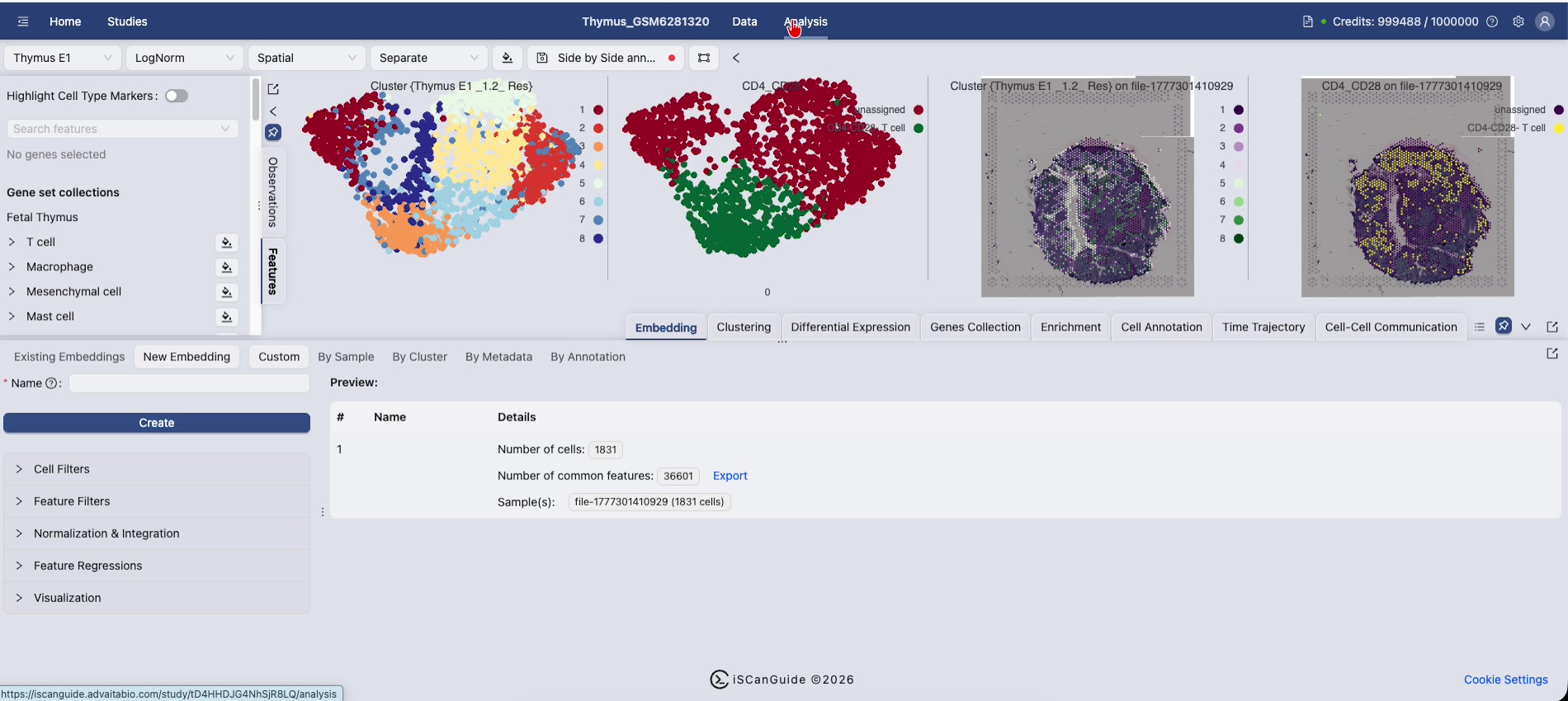
Open the existing CCC result
The Analysis workspace opens on the Cell-Cell Communication tab. An existing run on sample Thymus E1, labelled with the CD4_CD28 annotation against the consensus resource, is listed with 2 cell types and 1,233 interactions.
Click View in the Actions column to open the results.
Cell Type Pairs — global sender/receiver view
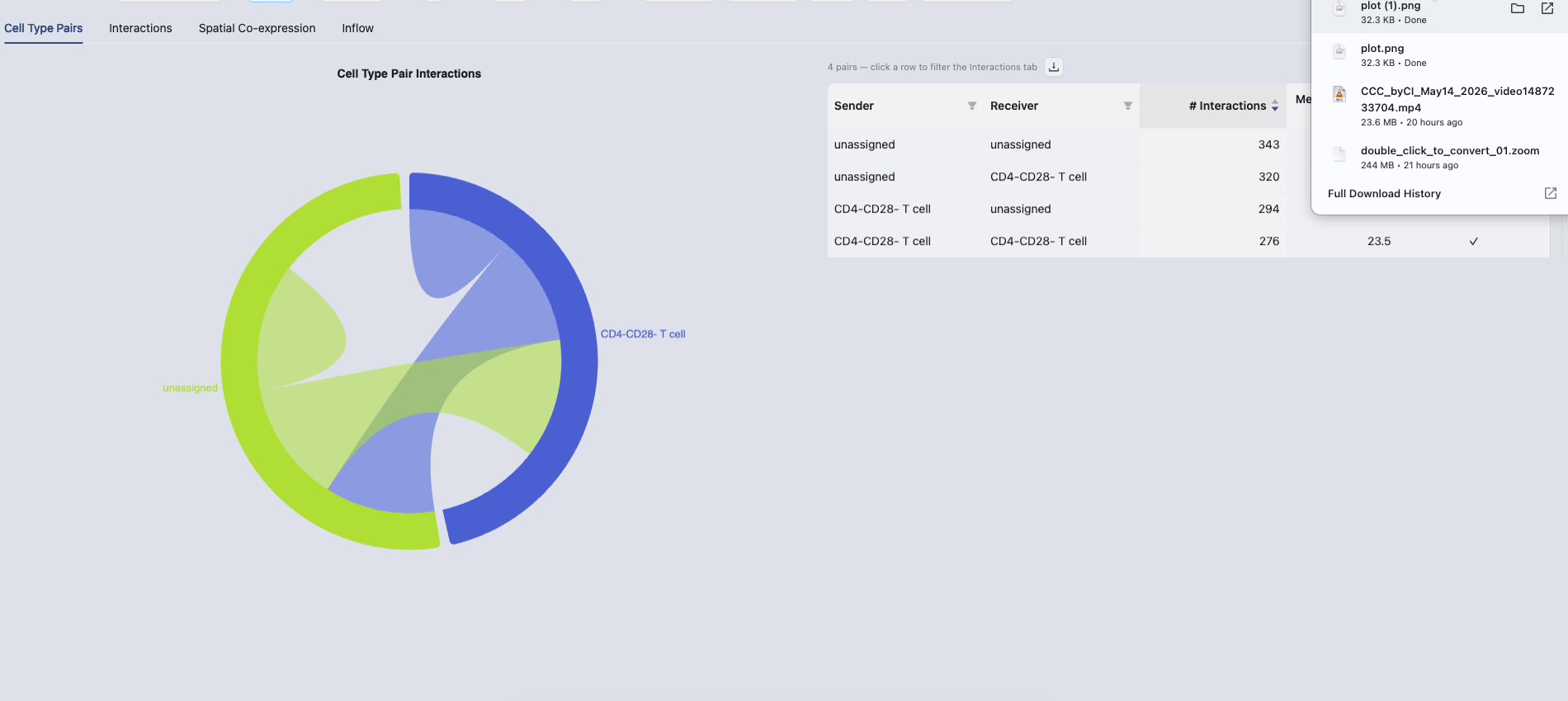
The results open on the Cell Type Pairs tab. A chord diagram summarises sender–receiver flow between the two annotated populations (CD4-CD28- T cell and unassigned).
The companion table ranks the four directed pairs:
Sender | Receiver | # Interactions | Mean Distance | Interacting |
|---|---|---|---|---|
unassigned | unassigned | 343 | 23.5 | Yes |
unassigned | CD4-CD28- T cell | 320 | 39.5 | Yes |
CD4-CD28- T cell | unassigned | 294 | 26.7 | Yes |
CD4-CD28- T cell | CD4-CD28- T cell | 276 | 23.5 | Yes |
Interpretation: homotypic signalling dominates within each compartment (343 and 276 interactions respectively), but the strongest heterotypic channel runs from the unassigned compartment to CD4-CD28- T cells (320 interactions at a slightly longer mean distance of 39.5).
Every chart supports a built-in export panel for downloading publication-ready images at multiple resolutions.
Interactions — ranked ligand–receptor pairs
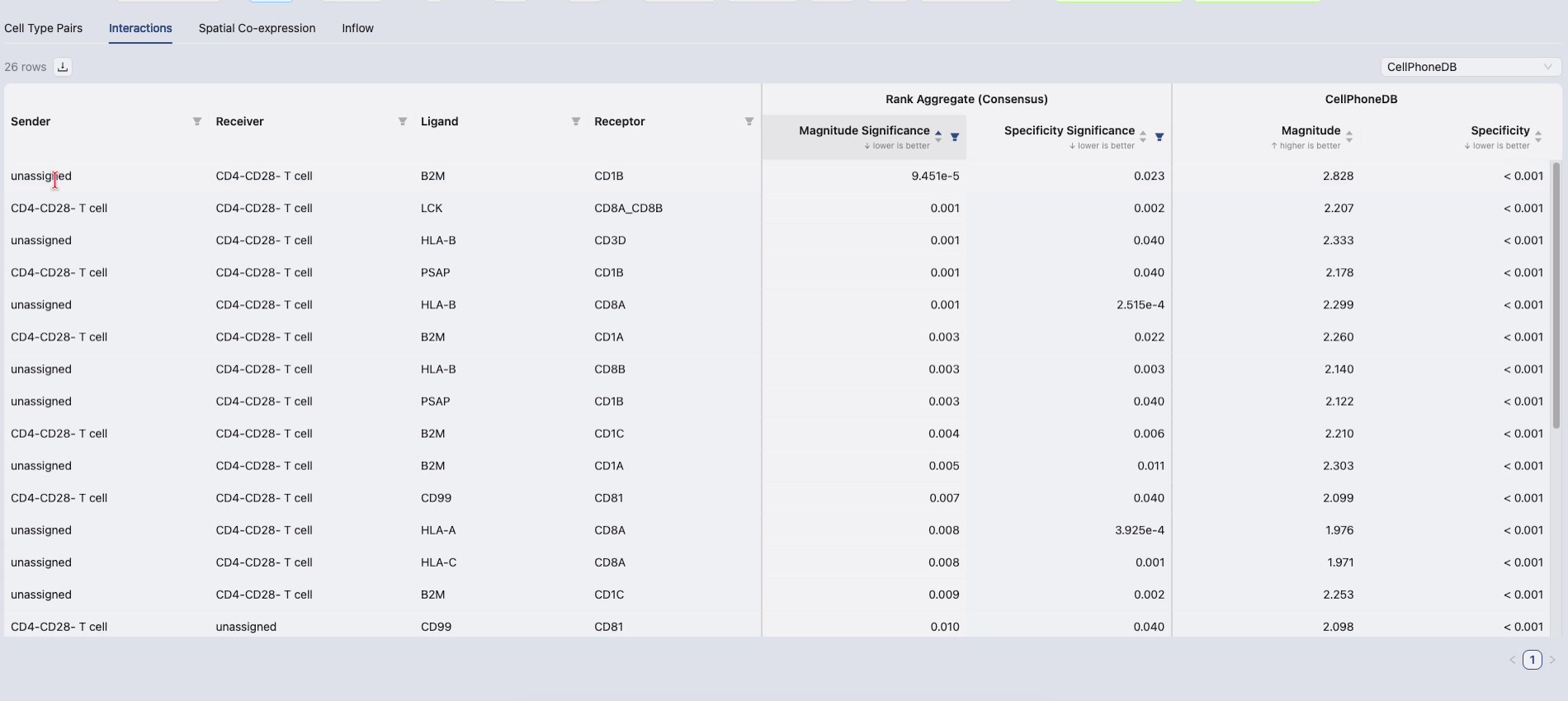
Click the Interactions tab. By default, the table shows all sender → receiver pairs ranked by the Rank Aggregate Consensus.
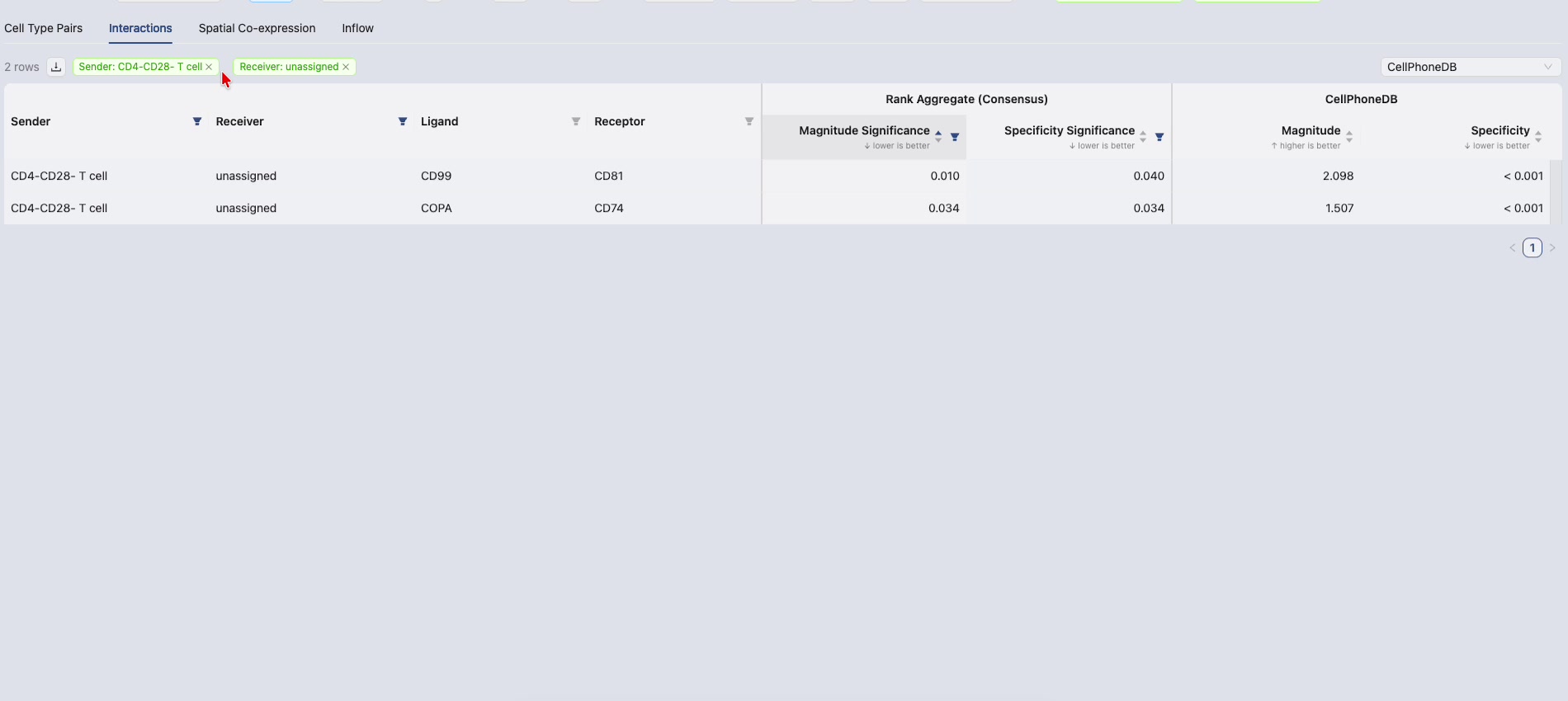
Filter by sender
Apply a sender filter for CD4-CD28- T cell. This returns 11 outgoing pairs; the top-ranked interactions by consensus magnitude significance are LCK → CD8A_CD8B and PSAP → CD1B.
Filter by receiver
Switch the filter to receiver CD4-CD28- T cell. This returns 24 incoming pairs. The strongest signals are B2M → CD1B (magnitude significance 9.45×10⁻⁵), LCK → CD8A_CD8B, and several HLA class I ligands signalling onto CD8A/CD8B/CD3D.
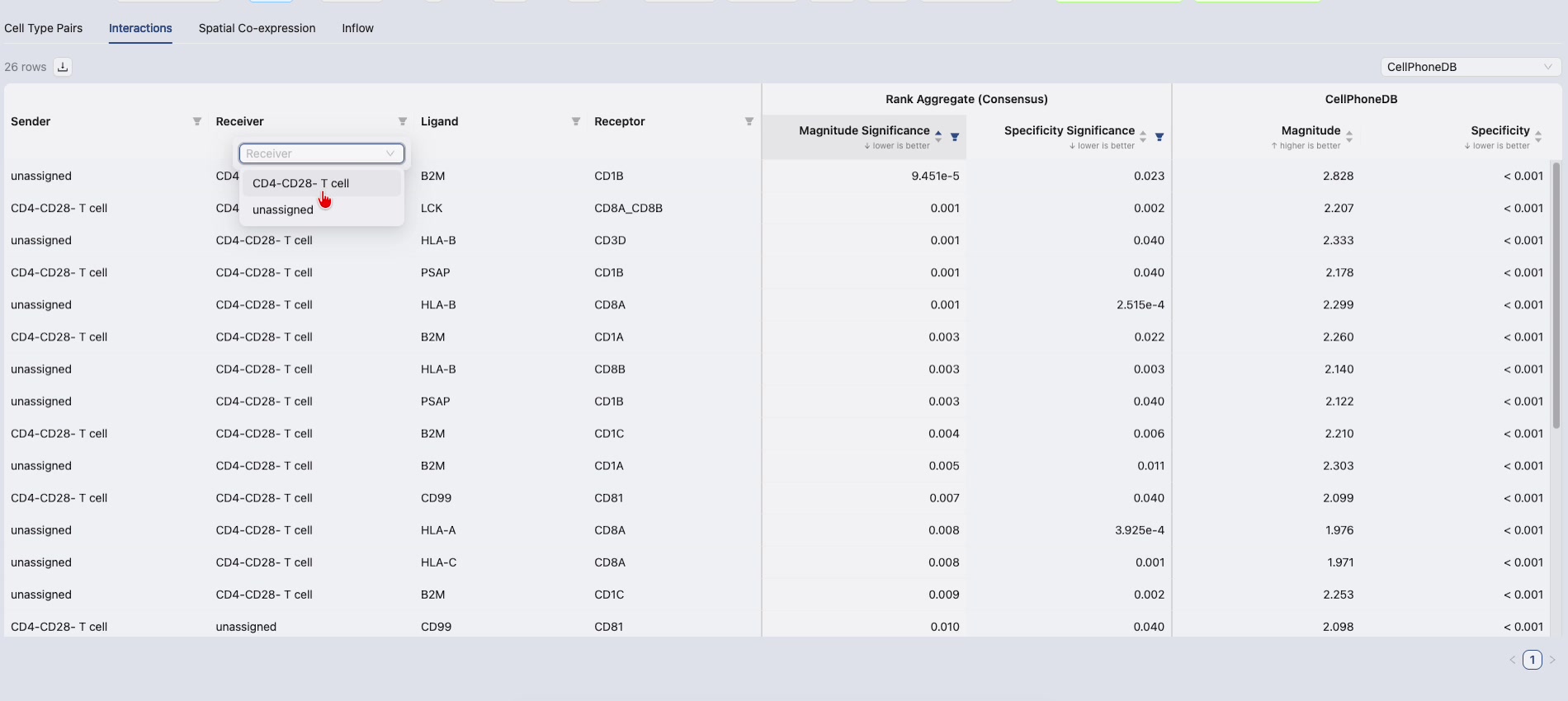
Interpretation: the unassigned compartment functions as an antigen-presenting niche (HLA-B, B2M) signalling to T-cell receptor and co-receptor machinery on the CD4-CD28- T cells. The LCK/CD8 autocrine signalling within the T-cell compartment reflects TCR-proximal kinase activity.
Spatial Co-expression — Moran's I
Click the Spatial Co-expression tab. This tab evaluates which ligand–receptor pairs are physically co-located on the tissue.
With the default filter of Moran's I ≥ 0.01, four pairs survive:
Ligand | Receptor | Moran's I | p-value | Mean Cosine | Std Dev |
|---|---|---|---|---|---|
LCK | CD8A_CD8B | 0.172 | < 0.001 | 0.940 | 0.043 |
CD99 | PILRB | 0.088 | < 0.001 | 0.593 | 0.102 |
CCL25 | CCR9 | 0.069 | < 0.001 | 0.770 | 0.084 |
PSAP | CD1B | 0.016 | < 0.001 | 0.942 | 0.039 |
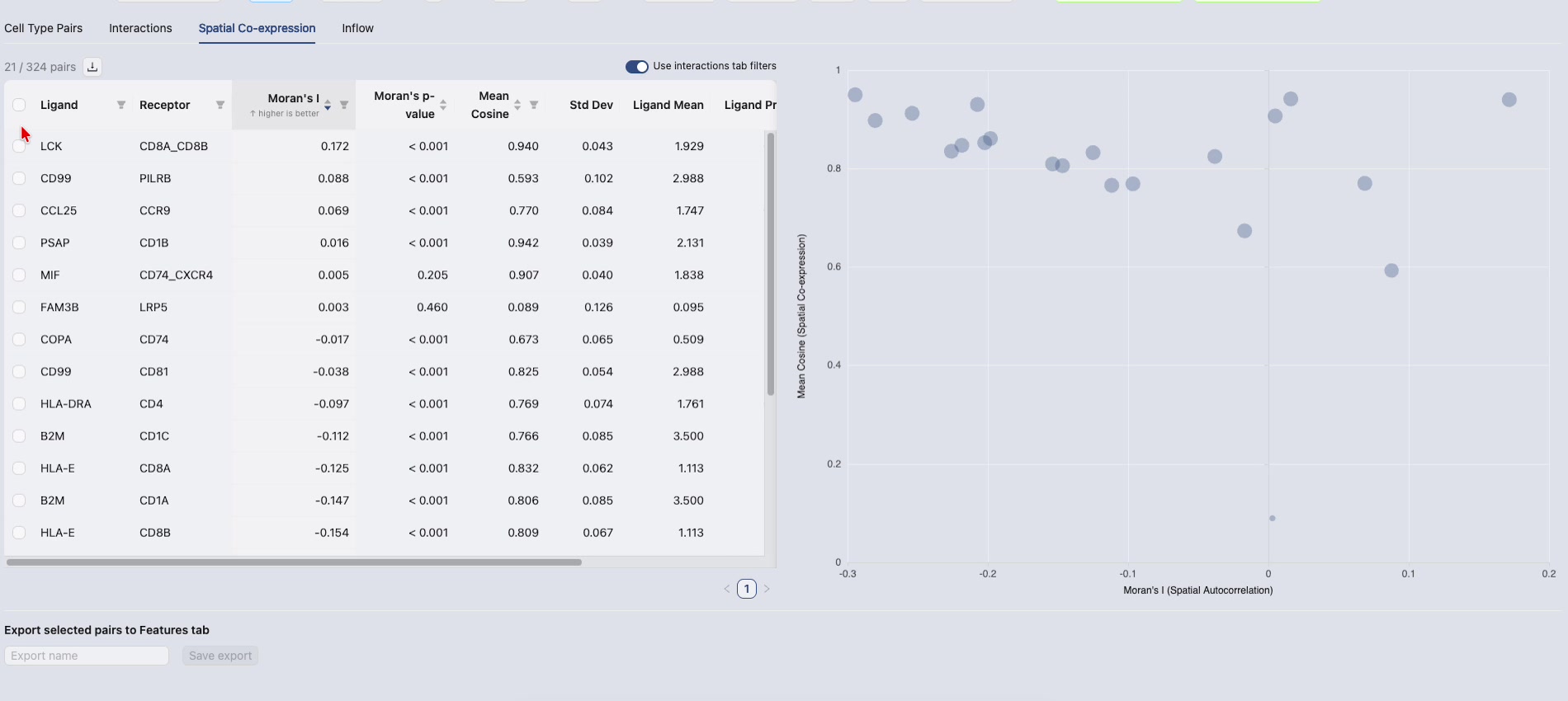
Interpretation:
LCK → CD8A_CD8Bis the most spatially clustered axis (Moran's I = 0.172, Mean Cosine = 0.94), consistent with a localised lobular T-cell zone.CCL25 → CCR9is the canonical thymocyte-homing chemokine axis — a clear spatial signal even at moderate Moran's I.
Removing the Moran's I filter shows all 21 pairs, including those with negative Moran's I (anti-co-localised) such as HLA-E → CD8A and B2M → CD1A.
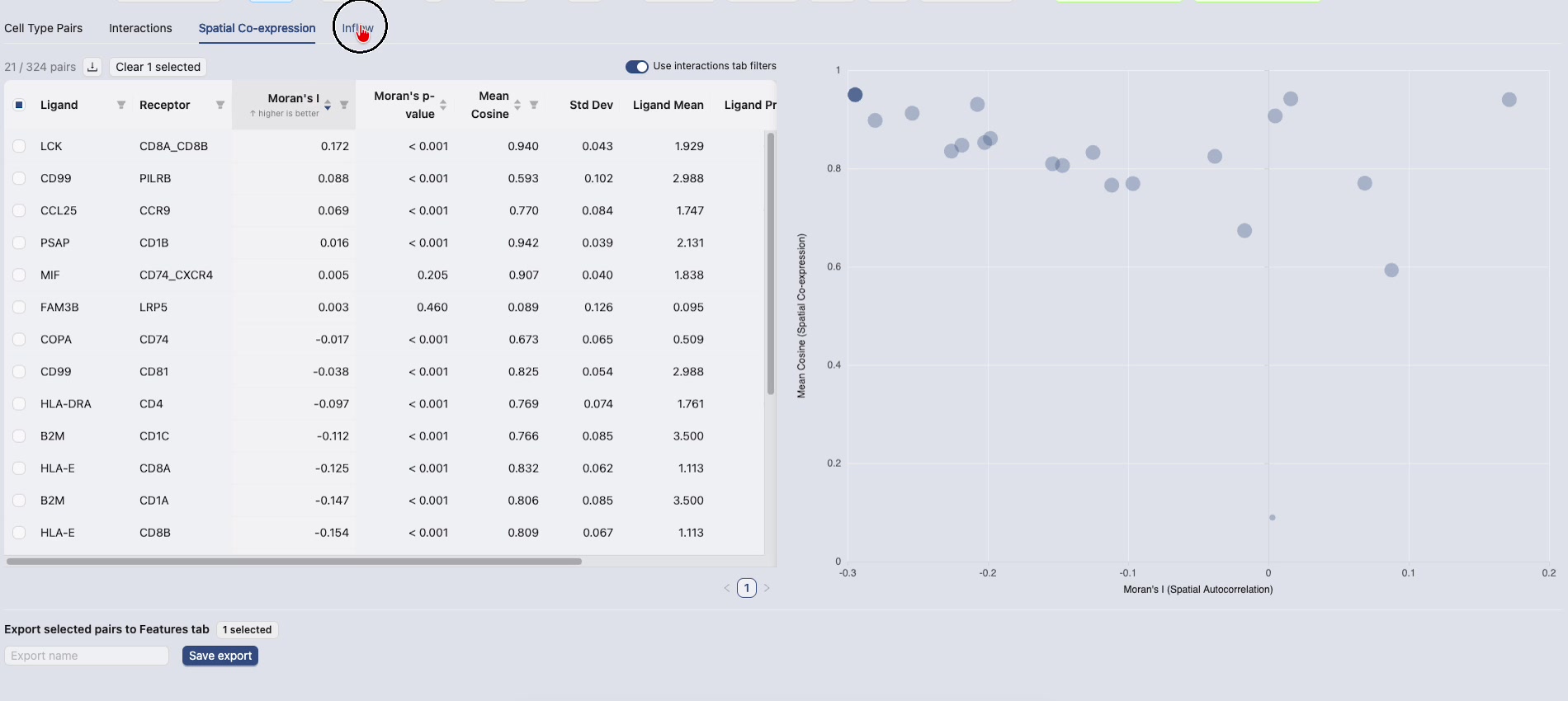
To overlay a pair on tissue, select its row, enter a name in Export selected pairs to Features tab, and click Save export.
Inflow — receiver-side signalling pressure
Click the Inflow tab. This tab quantifies how much signalling each receiver cell receives from each ligand–receptor pair.
With sender CD4-CD28- T cell, Moran's I ≥ 0.01, and FDR p-value ≤ 0.05 applied, the bar chart ranks the top pairs by Moran's I — led by LCK^CD8A_CD8B, PSAP^CD1B, EFNA1^EPHB6, and CXCL12^CXCR4.
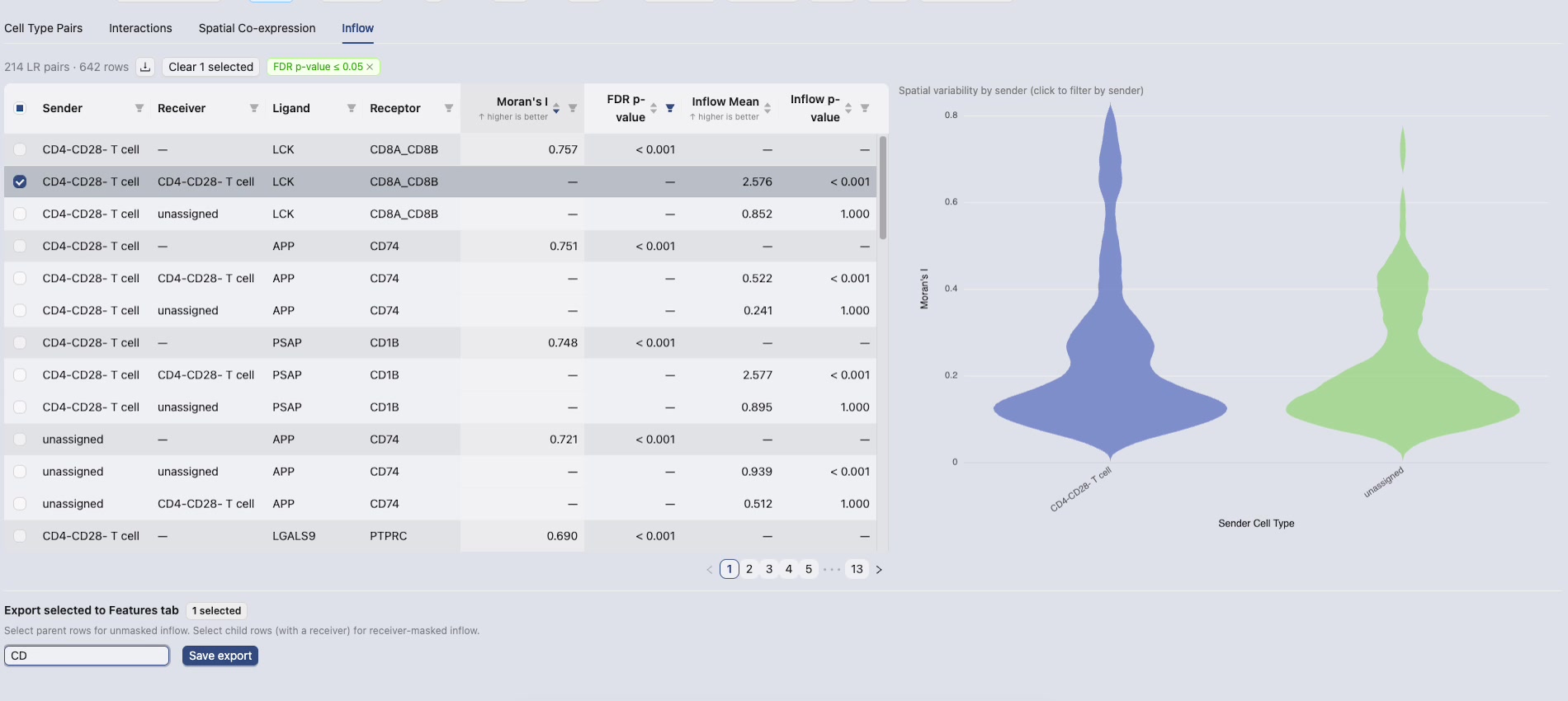
Switching the right-hand visualization to a violin plot shows the distribution of Moran's I across all LR pairs per sender. Both senders produce skewed distributions with a long upper tail crossing the α = 0.01 threshold — a small subset of incoming channels are very spatially organised, while most are diffuse.
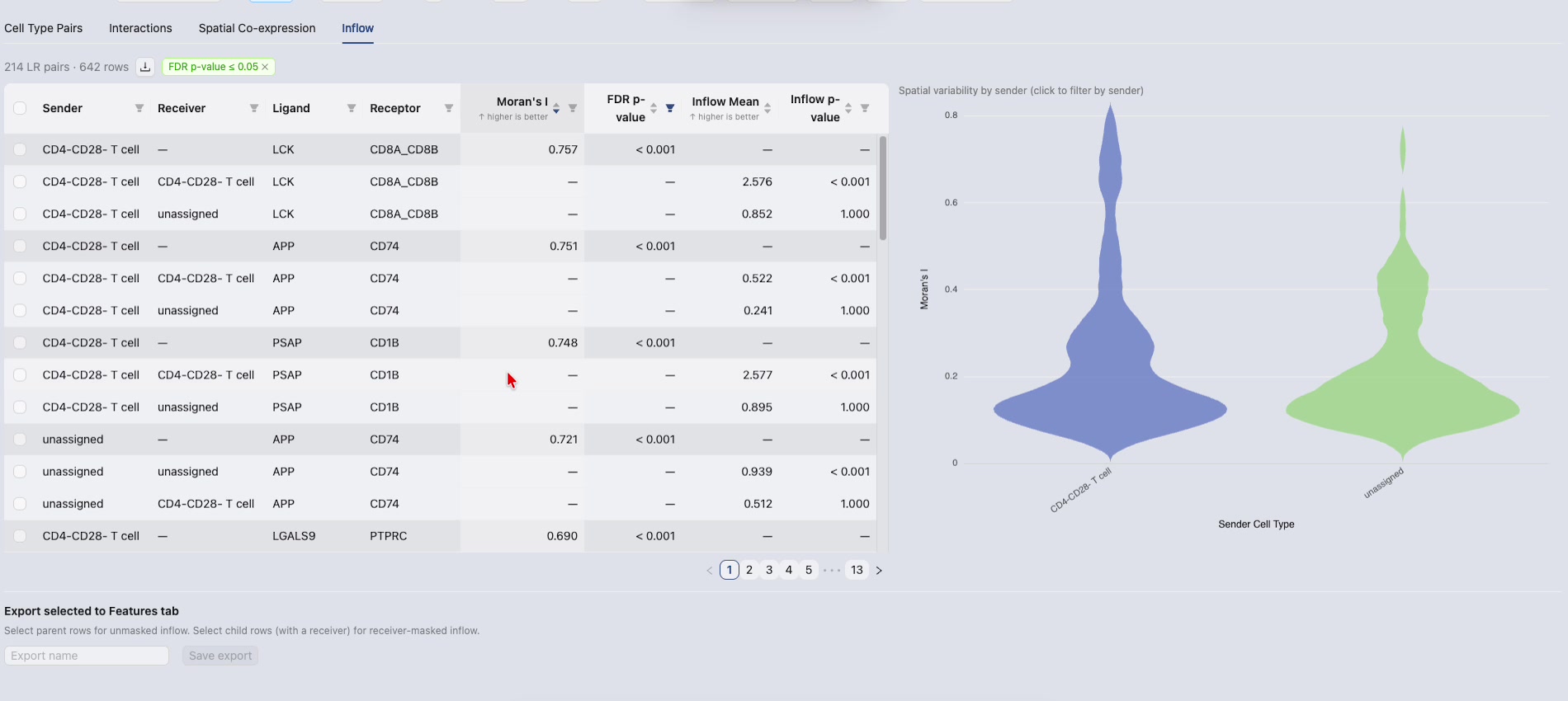
Select rows and click Save export to push them to the Features tab for downstream tissue overlay.
Creating a new analysis with Advanced Parameters
Switch to the New Analysis tab. Configure the same run to reproduce the existing result:
Parameter | Value |
|---|---|
Sample | Thymus E1 |
Cell type labels from | Cell Annotation |
Cell Annotation | CD4_CD28 |
Ligand-receptor resource | Consensus |
Expression proportion | 0.10 |
Min cells per type | 6 |
Permutations | 1000 |
Spatial bandwidth | Auto-detect |
Methods | CellPhoneDB, Connectome, log2FC, NATMI, SingleCellSignalR |
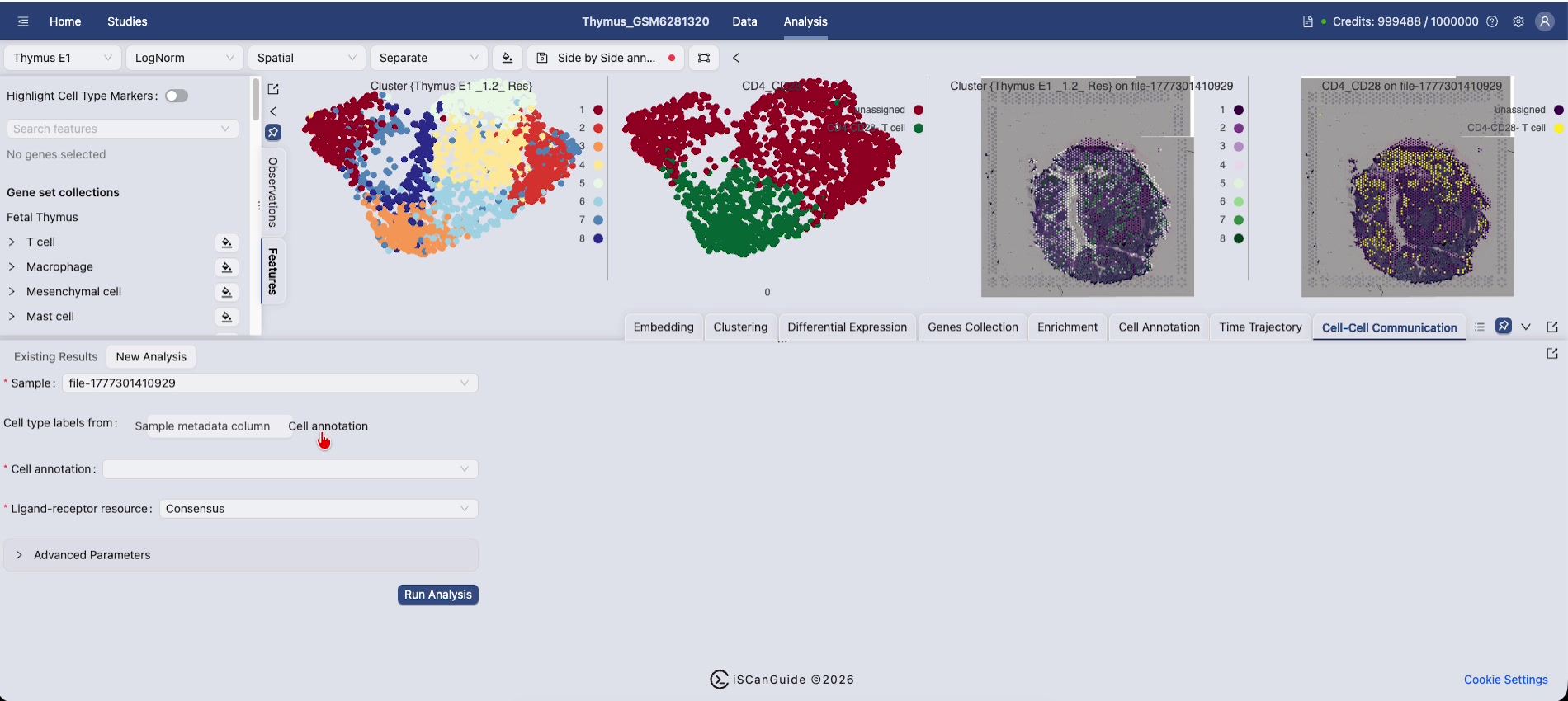
Click Run Analysis. A confirmation toast appears pointing to the study log for progress.
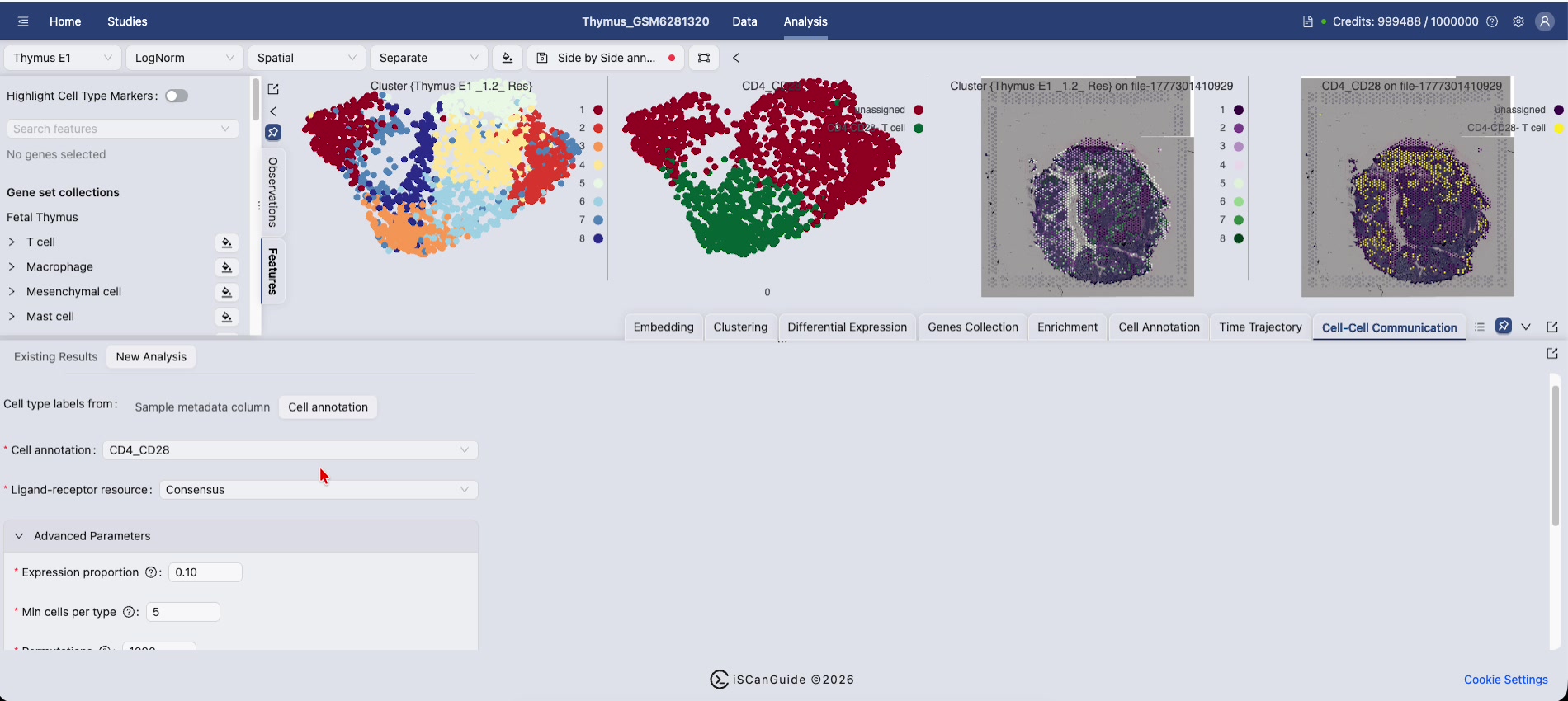
The same workflow can be re-run against a finer annotation than the binary CD4_CD28 split — the annotations visible in the left panel (Naive T cell, Megakaryocyte, Memory B cell, Th17/Th2/Th1 cells, MSC, M1/M2 macrophage, etc.) would resolve the "unassigned" compartment into its constituent thymic populations and reveal more granular interactions.
Comparing two runs side by side
When the second job finishes, both runs appear in Existing Results with their timestamps and per-run interaction counts.
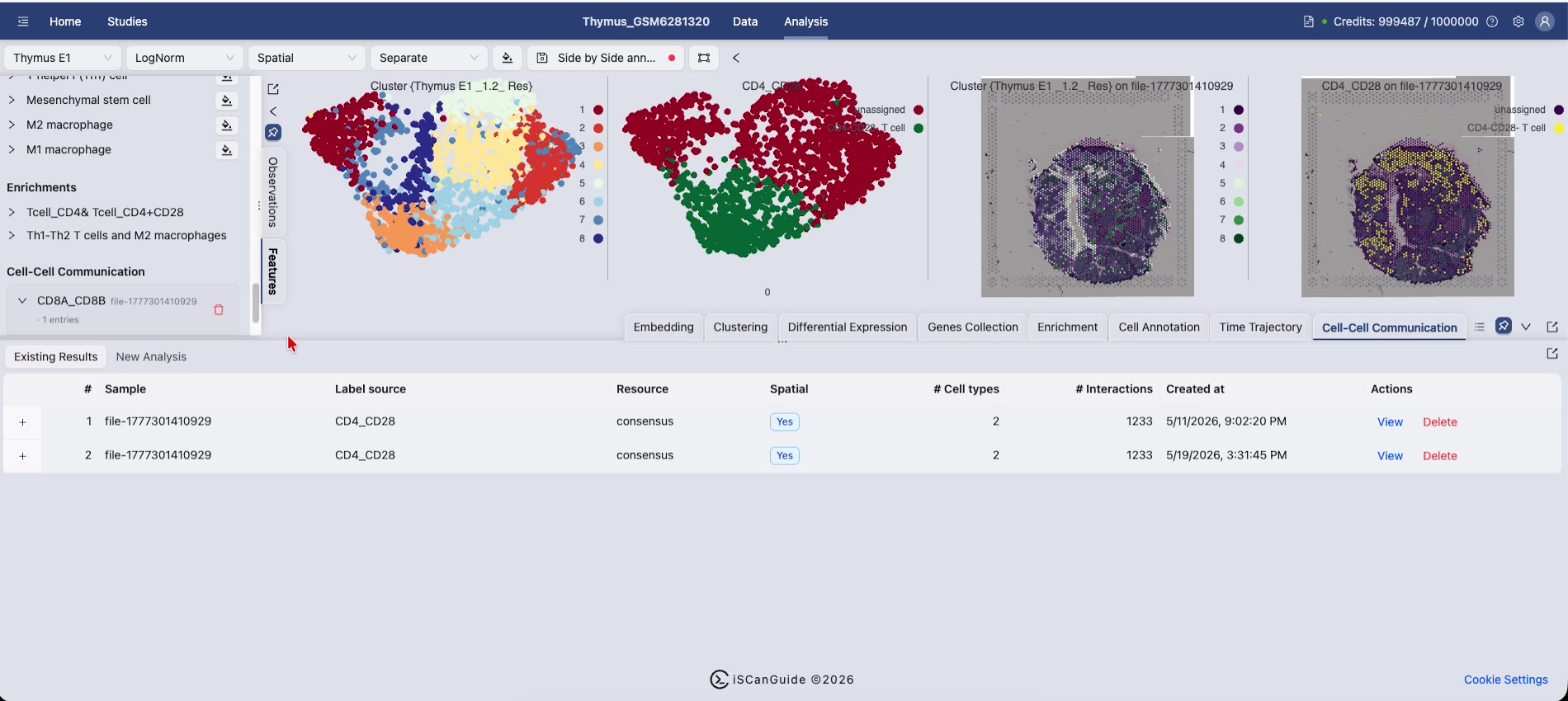
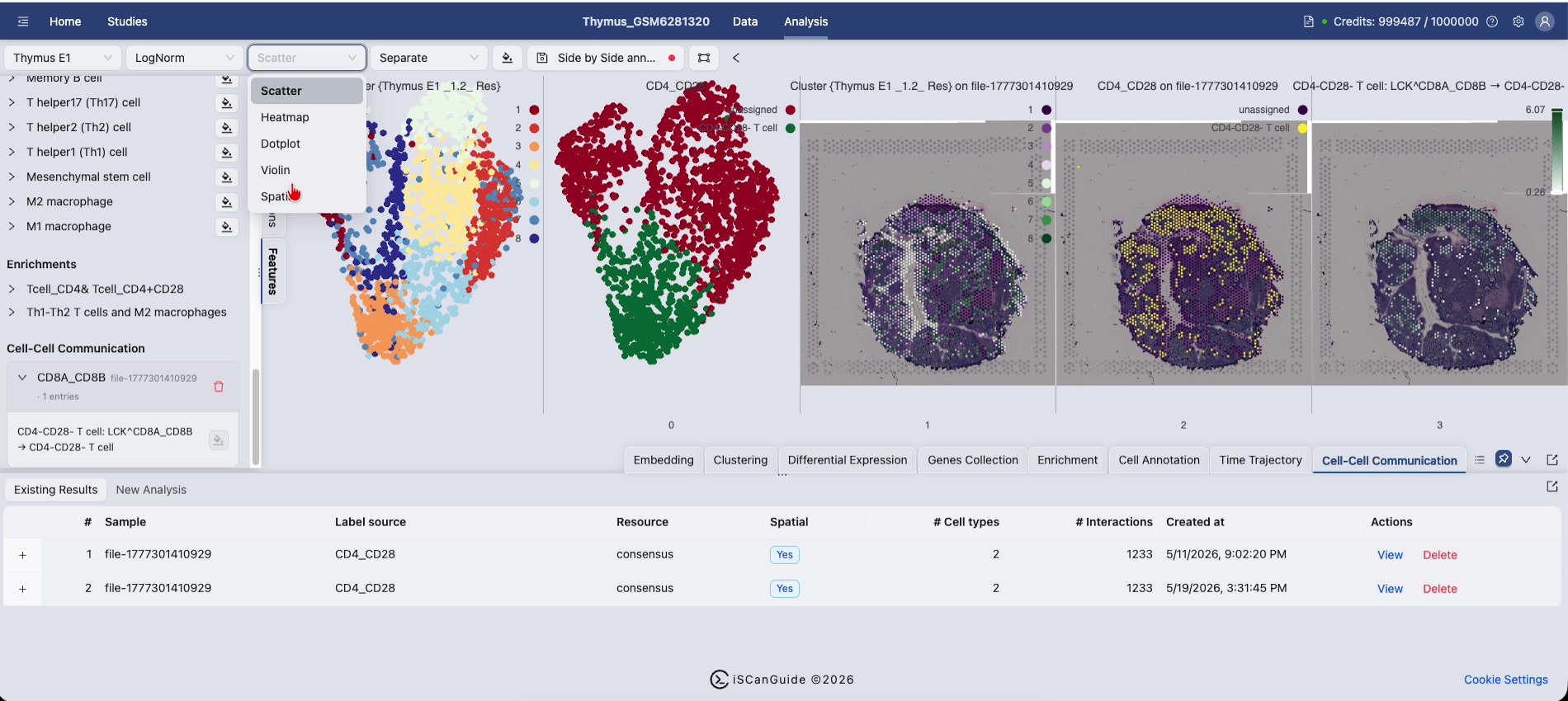
Open a Side-by-Side view to place both runs next to each other across the embedding and spatial panels, with a third panel showing the highlighted L–R pair LCK^CD8A_CD8B projected on the tissue.
Summary
The CCC module in iSCanGuide produces an end-to-end view of cell–cell communication on a spatial sample:
The consensus engine identifies a thymic antigen-presentation ↔ T-cell signalling programme (B2M/HLA-B → CD1B/CD3D/CD8A) plus intra-T-cell TCR-proximal signalling (LCK → CD8A_CD8B) as the dominant axes.
Adding the spatial layer narrows the biologically interesting set: only four of 324 candidate pairs have meaningful spatial co-expression at Moran's I ≥ 0.01, led by
LCK → CD8A_CD8Band the thymocyte-homingCCL25 → CCR9axis.The Inflow analysis confirms that spatial structure is sender-dependent and concentrated in a small tail of ligand–receptor pairs.
The whole workflow is reproducible from the Advanced Parameters panel and can be re-run on richer cell-type annotations without leaving the iSCanGuide interface.